
c. 2560 BCE / West Asia & North Africa
The Giza Pyramids and the Nile State
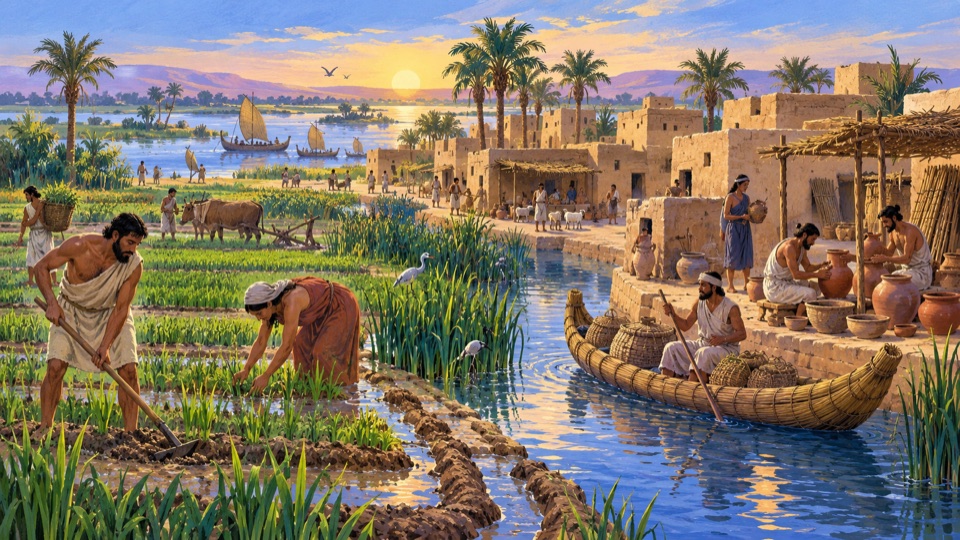
Agriculture and transport along the Nile supported large tomb-building projects, and the pyramids inscribed royal power, religion, and social mobilization in stone.
The story
Khufu's Great Pyramid was built during the Fourth Dynasty of the Old Kingdom, although its exact year of completion can only be estimated. Quarrying and transporting stone and supplying workers required coordination of resources across settlements. The tombs expressed ideas about royal power and the afterlife while preserving clues about the organization of labor. Memphis and its necropolis form a historical landscape that changed over a long period; the political territory of this era cannot be equated with the borders of present-day Egypt.
Elsewhere in the world
While the pyramids were being built, Indus cities were also organizing large public construction projects, using different forms of urban life and authority.
Dates and precision
c. 2560 BCE Approximate year
An archaeological or scholarly estimate, rather than a claim that an event occurred in one exact year.
Representative map location
Representative coordinates · 29.979°, 31.134°
Coordinates locate a representative point for the story. They do not mean the event happened only here and do not represent historical borders.
Bibliography
- UNESCO | Memphis and its Necropolis
Sources are listed as bibliography titles, without external links. A reference does not mean every sentence or interpretation has been independently verified.