
c. 3300 BCE / West Asia & North Africa
Uruk: Writing Emerges from the Accounting Room
The expansion of cities in southern Mesopotamia gave rise to early writing for recording goods and labor, changing how society was organized.
The story
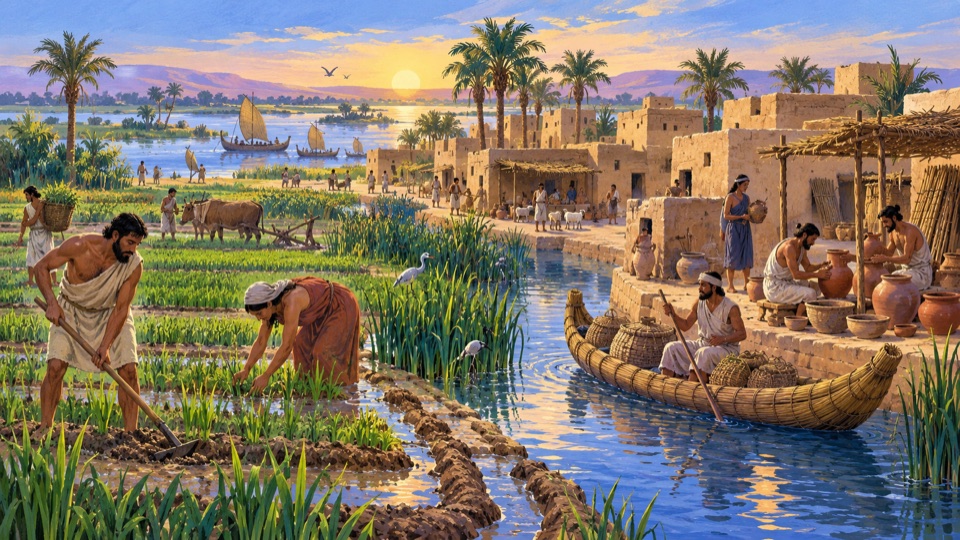
People in Uruk and neighboring cities recorded grain, livestock, and labor on clay tablets. The earliest signs first served administrative purposes and gradually developed into a cuneiform writing tradition capable of recording language. This was not an invention completed by one person on a single day; archaeological material reveals a long evolution. Cities, temple institutions, and scribes depended on one another, also showing us how everyday production entered historical records that could be preserved.
Elsewhere in the world
At the same time, societies in the Nile Valley were also moving toward political integration, although the precise relationship between the development of writing in the two regions remains debated.
Dates and precision
c. 3300 BCE Approximate year
An archaeological or scholarly estimate, rather than a claim that an event occurred in one exact year.
Representative map location
Representative coordinates · 31.322°, 45.637°
Coordinates locate a representative point for the story. They do not mean the event happened only here and do not represent historical borders.
Bibliography
- The Metropolitan Museum of Art | The Origins of Writing
Sources are listed as bibliography titles, without external links. A reference does not mean every sentence or interpretation has been independently verified.