
Region / World History
Sub-Saharan Africa
Explore 14 selected events from Sub-Saharan Africa across the six reading eras, with dates, complete stories, representative locations and bibliographies.
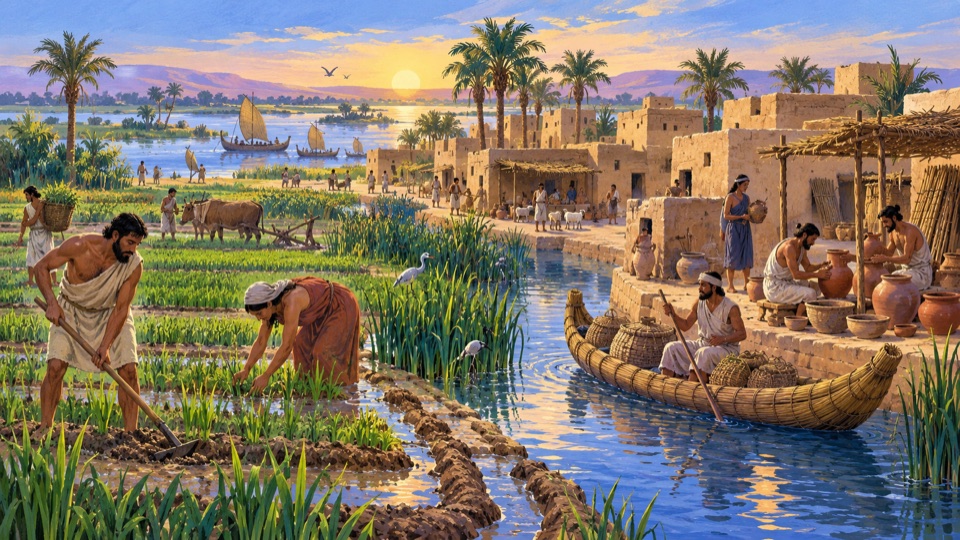
800 BCE–499 CE
Classical World
Meroe: A Kingdom on the Upper Nile
Meroe was an important center of the Kingdom of Kush; pyramids, craft production, and remains of water infrastructure testify to connections between inland Africa and the Mediterranean.
Djenné: Settlements and Markets in West Africa
Settlements in the inland Niger Delta grew into trading centres, with building traditions adapted to seasonal floods.
Aksum: Royal Power in the African Highlands
Stelae, royal tombs and palace remains reveal a political tradition whose symbolic importance outlasted its decline.
500–1399 CE
Interwoven Worlds
Kilwa and the Swahili Coast
East African port cities brought gold and ivory from the African interior into Indian Ocean trade, developing a Swahili urban culture with local roots.
Great Zimbabwe and Trade in the African Interior
Ancestors of the Shona built a large settlement with stone walls, supporting a political center through agriculture, livestock, and trade and bringing the southern African interior into Indian Ocean exchange.
Lalibela: Churches Hewn from Rock
Rock-hewn churches in the Ethiopian highlands became a lasting centre of Christian pilgrimage.
Mansa Musa's Pilgrimage and Mali's Networks
The pilgrimage of Mali's ruler Mansa Musa made West Africa's wealth and political influence widely known, highlighting the vitality of trans-Saharan trade routes.
1400–1749 CE
Global Encounters
Kilwa and the Swahili Coast
East African port cities brought gold and ivory from the African interior into Indian Ocean trade, developing a Swahili urban culture with local roots.
Great Zimbabwe and Trade in the African Interior
Ancestors of the Shona built a large settlement with stone walls, supporting a political center through agriculture, livestock, and trade and bringing the southern African interior into Indian Ocean exchange.
Timbuktu: Learning and Religion in West Africa
Mosques and centres of learning made the city a major setting for religious and intellectual exchange.
The Expansion of the Transatlantic Slave Trade
Colonial plantations and the slave trade forcibly displaced millions of Africans, building the Atlantic economy on profound deprivation of personal freedom.
1750–1913 CE
Age of Revolutions
1914–2024 CE
Modern World
Ghanaian Independence and the Call for African Unity
Ghana gained independence from British colonial rule, and Nkrumah linked national independence with the political goal of African unity.
The Wave of African Independence and the Principle of Self-Determination
Many African countries gained independence from European colonial rule, changing the United Nations' membership; state-building after independence also faced pressures involving borders, resources, and the Cold War.
The Genocide against the Tutsi in Rwanda
Extremist forces organized the killing of Tutsi civilians, also murdering Hutu and others who opposed the killings, exposing a severe failure of international protection mechanisms.
South Africa Holds Its First Non-Racial National Election
A long struggle against apartheid and negotiations led to an election open to all, after which Mandela became president and South Africa entered a new democratic phase.
The Launch of the African Union and Continental Cooperation
The African Union was formally launched in Durban, continuing the work of the Organization of African Unity and placing regional cooperation, development, and peace and security within a new institutional framework.